A Beautiful Thing
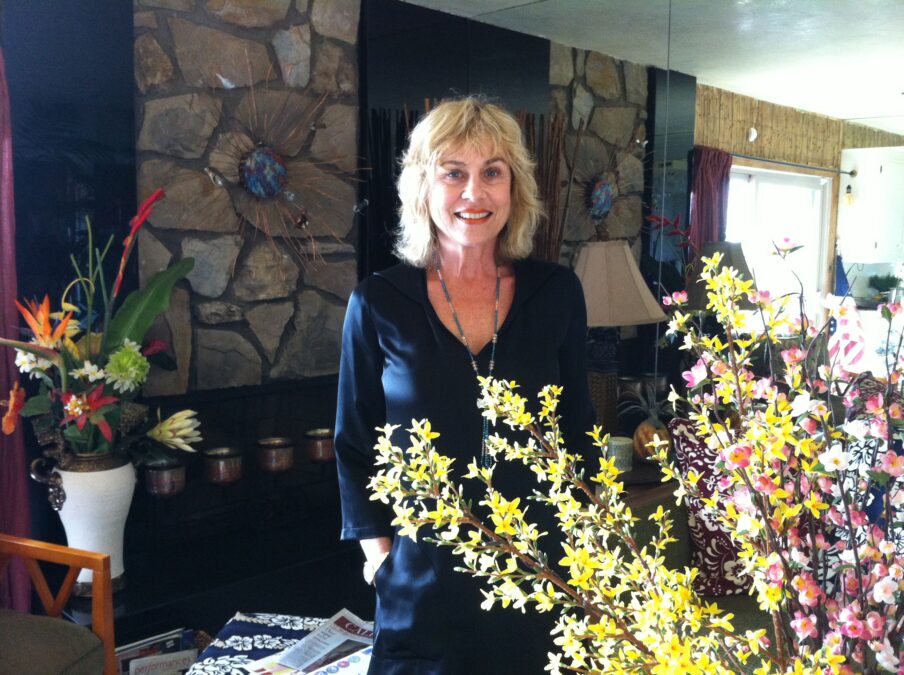
A close friend visited me a few
days ago. She is gorgeous inside and out. She has a genuine interest in learning and growing and she is kind. She recently had her hair cut in a stylish bob. She was wearing a pair of jeans that fit her perfectly and a tee shirt that showed off her flawless skin and her cleavage. She walked gracefully and she sat on my couch. I was in awe of how breathtakingly beautiful she was.
She looked at me with tears in her eyes. “What’s going on?” I asked her.
She grabbed some Kleenex. “I look terrible,” she said. “I can’t stand to look at myself in the mirror. I’m getting old. I hate my new haircut. I have a scar on my arm.”
She was thirty years younger than I was and she felt old and flawed. That was sad but not surprising. She had Body Dysmorphia, a common condition, mostly among women, in which a person becomes so intensely preoccupied with flaws in their appearance, they can’t see themselves like they
really are. When someone loses a hundred pounds, they still see themselves a hundred pounds heavier. It’s pretty much an epidemic among women these days as we try to fit the mold. But who created the mold?
Body Dysmorphia isn’t isolated to our physical bodies. In the year 1969, I starred in a film about the Vietnam War. I was 19 and I loved acting but I thought I didn’t measure up in a lot of ways. When we shot the first scene and the soundman played back the audio, I thought my voice sounded so terrible, I was sure they would fire me. They didn’t. When the soundman looked unbothered and nodded to the director to go forward to the next scene, I was stunned.
I’ve attended various showings of that movie over the years for marketing purposes. When I was younger, it made me cringe to watch it. I didn’t like how I looked or sounded and sometimes I had to get up and leave the screening room. That changed. I own a copy of the film and when I decided to view it recently, I saw that I had been the woman I had wished to be. The woman that I thought was unattainable. I just couldn’t see it. The lesson was clear. Whatever age we are, it would be a good thing to try and appreciate ourselves because in the next decade, we’ll look back and admire
how we looked. There’s no going back so we might as well accept ourselves in the here and now.
This kind of obsessing and criticizing doesn’t only happen as we age. A long time ago, Michelle Peiffer who has always been considered one of the greatest beauties in the film world, said she thought she looked like a duck. “It’s the way the corners of my mouth curl at the very end and my nose tilts up,” she said. “I should have played Howard the Duck.”
“If she thinks that about herself,” I thought, “I wonder what she thinks about the rest of us.”
Beauty is subjective. In the 1600s, Peter Paul Rubens painted women who were lush, full-figured and voluptuous. Skinny women must have felt inferior. Skip ahead about four hundred years and Twiggy was the symbol of beauty. She was skinny, tall, flat chested and she weighed 92 pounds. Women who had normal size bodies and large breasts felt inferior. They starved themselves and tried to measure up. Today, we still struggle with trying to look like someone else. Or trying to look like a better
version of ourselves. What if we decided we’re perfect the way we are? We’d have a lot less stress and a lot more peace.
I think that beauty shows up when
you decide to be yourself. I tell my students that there is no good or bad when
they write. When they’re being authentic, that’s good writing. Beauty is the
same. When you’re being genuinely yourself, you look wonderful. I’ve seen women
who have crooked noses, small eyes and flawed skin and they look amazingly beautiful
because of the light that seems to shine from their insides out. I was once at
a small dinner party with friends. A man I didn’t know came over to me to
introduce himself. He was friendly and gracious and I found him quite
attractive. He said to me, “You have a lovely face but the most beautiful part
of you is the way you light up a room.”
All I could hear was that I wasn’t beautiful. That I was lovely “but.” It seemed like it was “less than” and I felt insecure. It wasn’t until years later that I understood he had given me a supreme compliment. Lighting up a room was so much better than looking a certain way. Your looks will change but you can light up a room for the rest of
your life.
For me, being beautiful doesn’t mean having pretty hair or large eyes. It’s about being compassionate and caring of the people around you. It’s about being appreciative, sensitive and gentle with the people you love and with yourself. The most beautiful woman I ever saw was a Native American Elder whose face was so lined and wrinkled, it looked like a roadmap to her life.
Elizabeth Kübler-Ross, pioneer in death, dying and grief, said, “Beautiful people do not just happen. The most beautiful people I have known are those who have known defeat, known suffering, known struggle, known loss, and have found their way out of the depths.”
Recent Comments